
The bullwhip effect in manufacturing occurs when small changes or errors in projected customer demand become amplified throughout the purchasing and production planning process. Traditional planning methods that rely heavily on forecasts, tentative demand, and long-term projections can magnify these errors, resulting in excess inventory, material shortages, production disruptions, and inefficient resource utilization.
Demand driven manufacturing offers an alternative by reducing reliance on tentative demand and incorporating appropriate inventory protection directly into item planning settings.
DBA Manufacturing uses a demand driven MRP approach that coordinates purchasing and production based on actual demand, realistic lead times, and strategic inventory stocking. This helps manufacturers reduce planning variability, maintain appropriate inventory levels, improve production throughput, and fulfill customer orders more efficiently.
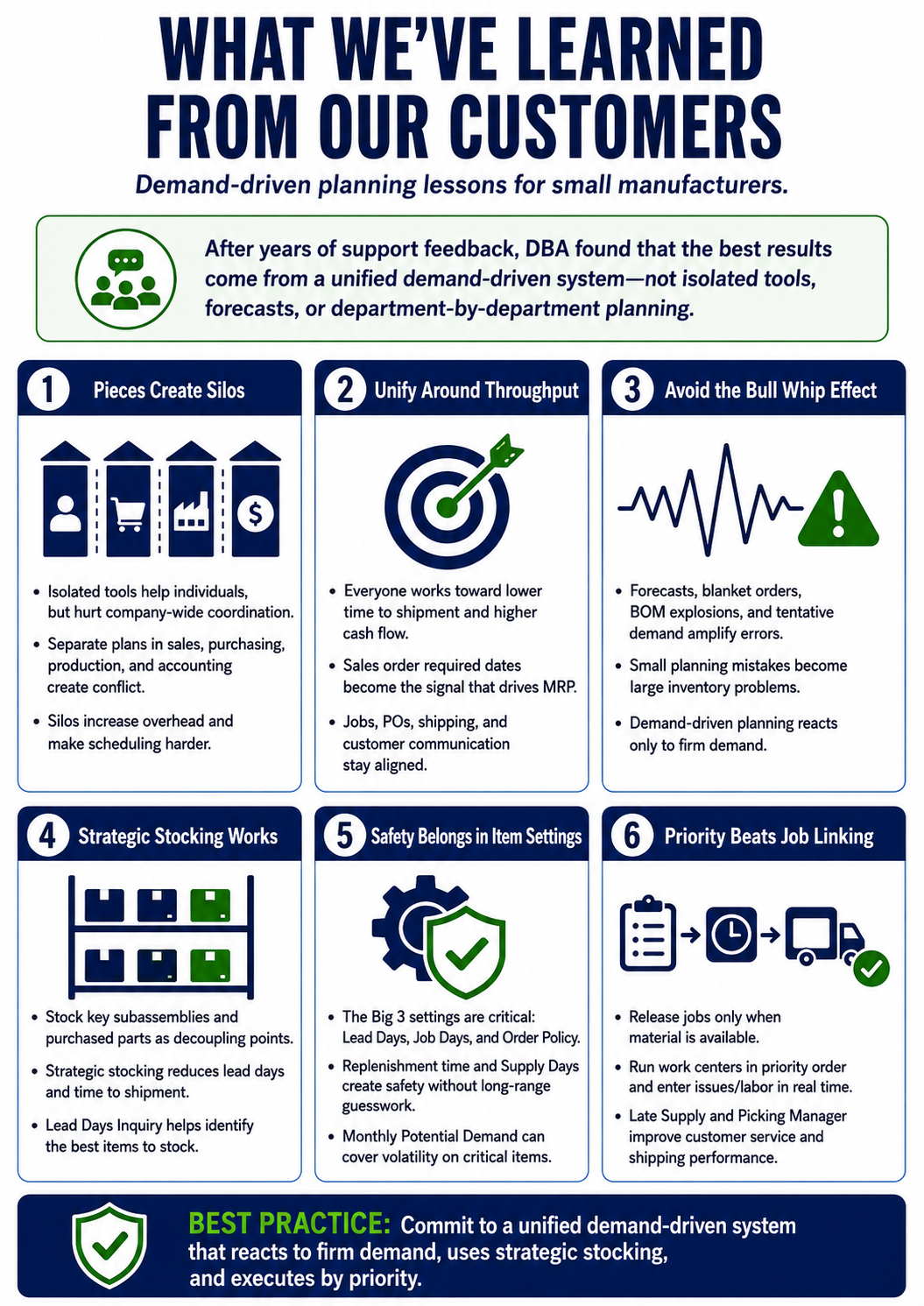
Avoid the “bullwhip” effect
When you introduce tentative demand into your planning profile small errors in your forecasts and projections get amplified through all levels of production and become very large errors in your inventory levels. This “bull whip” effect is seen in nearly every traditional planning method and is why the industry is learning that demand driven planning is a superior approach for manufacturing.
DBA replaces forecasts, BOM explosions, blanket orders, shortage reports, and long term planning projections because all of these methods introduce tentative demand and errors that get multiplied through all levels of production. DBA has a better path forward that has safety built into the item settings instead of relying on the accuracy of forecasts and long term tentative projections.